
Aisystant · intellectual work environment
Work and growth — in one session.
The work gets done — and that same action makes you grow. Not a course before the work, not a drill after it.
Where this comes from
Problem ≠ Task
Before strong AI, it was hard to explain the difference between a professional skill and thinking itself: skills got paid, thinking was dismissed as "not a market." AI changed that — and it starts with one distinction everyone already recognizes in practice.
A task is when the method is basically clear: you just need to apply it. A problem is when you look at a situation and don't even know where to start. You have experience, resources, AI at hand — and still no movement.
AI radically sped up solving tasks: it writes code, texts, answers questions. But it doesn't do the main thing — it doesn't turn uncertainty into a task by itself. Without that conversion, a person with AI and without AI ends up in the same place: either stuck, or a random result — just faster.
So the core skill right now isn't programming, or even "knowing how to use AI" — it's the ability to turn a problem into a task through systems modeling. That's the moment of the real shift: instead of overload and procrastination, structure, clarity, and energy appear — not from motivation, but from understanding and control.
Systems thinking alone isn't enough — you need an environment where it actually works in practice, not just as book knowledge. That's IWE.
Not an abstraction — a transcript
One full session
A real work week, worked through. Word for word, not staged.
youHelp me prioritize this week's tasks: prepare a report for my manager, reply to three clients, clear my inbox, finish a conference presentation, get on a call with the team about a new project.
IWEBefore ranking — these are different kinds of tasks. Which ones hold up what already works and shouldn't break? Which ones actually move you forward, not just maintain the status quo? And what's genuinely due today or tomorrow, or it slips?
youThe report is due Friday, clients can wait a couple of days, the presentation is my personal goal to make an impression at the conference, and the call is routine.
IWEThen: the call and inbox hold your rhythm — do them in between. The report due Friday is urgent, a hard deadline, put it first. The presentation is your important work: since you said it's about "making an impression," I wouldn't let it drown under the routine.
IWEThis was a one-off breakdown. But you said the presentation is about "making an impression." Let's check in the same way next week: did it avoid drowning, and build next month's priorities on top of it. That's what a personal guide actually is — not one-off advice, but a regular trajectory.
So how is this actually different from a regular chat?
youOkay, but how is this even different from ChatGPT? It would've given me the same list.
IWEChatGPT could remember the facts too: the report, the presentation, "making an impression." But I didn't just remember — I built a frame: the call and inbox hold rhythm, the report is urgent, the presentation is important. Next time I won't ask "what's on your plate this week" from a blank page. I'll ask: "How's the presentation going as your important work?" — and we'll continue from where we left off.
Positioning
Not another AI tool
Most AI tools today compete on one thing: doing more instead of you. An agent that writes your emails. An assistant that makes decisions for you. The less human in the loop, the "better" the tool — by that logic.
We go the other way. IWE isn't about having less of you in the process. It's an Iron Man suit: it amplifies the person inside, it doesn't replace the pilot with autopilot. Intent, taste, responsibility for the outcome — always stay with the human. The question isn't "what will AI do for me," it's "what can I, in this suit, do that I couldn't reach before" — not a one-time leap, but making that the new normal.
And there's plenty to reach for: the same suit works at different systemic scales — from a personal task to a team, to a life's work. The scale of what you take on grows with you, not with how much you handed off to the machine.
Positioning
Not a course. Work from day one
Aisystant is not an education business. Learning is usually kept apart from work: material first, application — someday. Here the work task and growth happen in one session.
And growth is not only about yourself. You work on the real systems around you: your product, the company that builds it, your customers' work. One method across all levels — so growth is not capped at "personal development".
We have courses too — but they are a possible entrance, not the core. The core is a work environment that helps you keep this mode going in every next work session.
How it's actually built
Five natures of one environment
IWE isn't one tool or one metaphor. Five natures operate at once.
Workshop
Not a classroom — a workbench for real work. Thinking, writing, designing every day for the sake of the result, not for the sake of learning a method.
Iron Man
A suit that amplifies the pilot by orders of magnitude: access to all your memory, an army of executing agents, a reaction speed no unaided human has. The suit doesn't teach — it amplifies what the pilot already knows how to do.
Avatar
Your personal IWE is plugged into something larger — a community's methodology, an organization's knowledge, a culture of practice. You act as a node in a network, not an isolated loop.
Tamagotchi
The environment has to be grown, not handed to you finished. Feed it context, tend to your projects — neglect it and it degrades; invest and it grows.
Primer (from "The Diamond Age")
A nod to Neal Stephenson's novel: a living primer that reads its reader and guides them along their own trajectory — the environment adapts to you, not the other way around.
All five are tied together by one principle — co-evolution: the environment changes together with whoever works in it.
The big questions
What actually worries you
Not a feature list — answers to what you actually ask yourself in the age of AI. From a personal question to a question about your life's work.
Why an environment, not just another vendor AI chat?
The world doesn't have a shortage of artificial intelligence — it has a shortage of human intelligence. Result = human intellect × AI. AI is a multiplier, not a number on its own: if intellect is weak, it just multiplies weak faster.
A regular vendor chat gives you a powerful multiplier and stops there — nobody's growing the other factor. An environment grows exactly that: an open systems-thinking methodology built directly into your work with any AI vendor — Claude, ChatGPT, whatever you use — making its answers sharper, because now a method is steering them, not just how you phrased the question.
How do I stay in demand and build a career in the age of AI?
The wrong question is "will AI replace me." The right unit of comparison isn't the person against the AI — it's the pairing: not Tony Stark versus the suit, but Tony Stark inside the Iron Man suit. The honest question is what you're adding to the suit.
As long as there's intent, taste, and responsibility for the outcome, the suit amplifies you and puts you a head above other specialists in your field. Alone, you can't hold the bar: the average answer of the AI era overtakes you every month. In an environment that grows with you — you can. You're not leaving your profession — you're strengthening it.
What does this give the people around me and my company?
Alone, you amplify yourself. Connected to something bigger, you amplify a team: your personal IWE carries a community's methodology and an organization's knowledge, and you act as a node in a network, not an isolated loop.
For those leading people: the same logic that lets leaders hold several directions at once — intent and decisions stay with the human, execution is prepared by a team of people and AI agents. We give you that trajectory: from amplifying yourself to knowing how to run that kind of team.
What should you aim for if you want to do something that matters?
On the Kardashev scale, humanity has barely begun to harness the energy of its own planet — we haven't even started to grasp the universe. There's incomparably more work out there than there are people to do it.
Everyone who takes on systemic problems moves civilization closer to understanding the world — and finds their own share of the work, down to taking responsibility for their own corner of the universe. That's not a metaphor. It's arithmetic of scale.
What IWE is not
Not a second brain, not a course, not a subscription coach
An exocortex you assemble yourself from open tools. "In the flow of work" corporate training. An AI mentor on call 24/7. All of that already exists — and none of it matches the four points below.
What's under the hood
First Principles
The methodology built into IWE is called "First Principles" (FPF) — an open pattern language for turning difficult engineering, research, management, and human-AI work into explicit, reviewable, improvable reasoning. Its author is Anatoly Levenchuk, co-founder of Aisystant; the methodology develops in the open, as its own project anyone can study, copy, and criticize without asking permission.
It doesn't replace Claude, ChatGPT, or any other AI — it sits between your question and its answer and makes that answer sharper. In practice, that means it: keeps meaning stable as work crosses people, tools, and time · separates the actual subject of the work from diagrams and promises about it · compares options without collapsing too early onto one favorite · defines quality criteria before improvement even starts.
A word from both of us
Co-founders
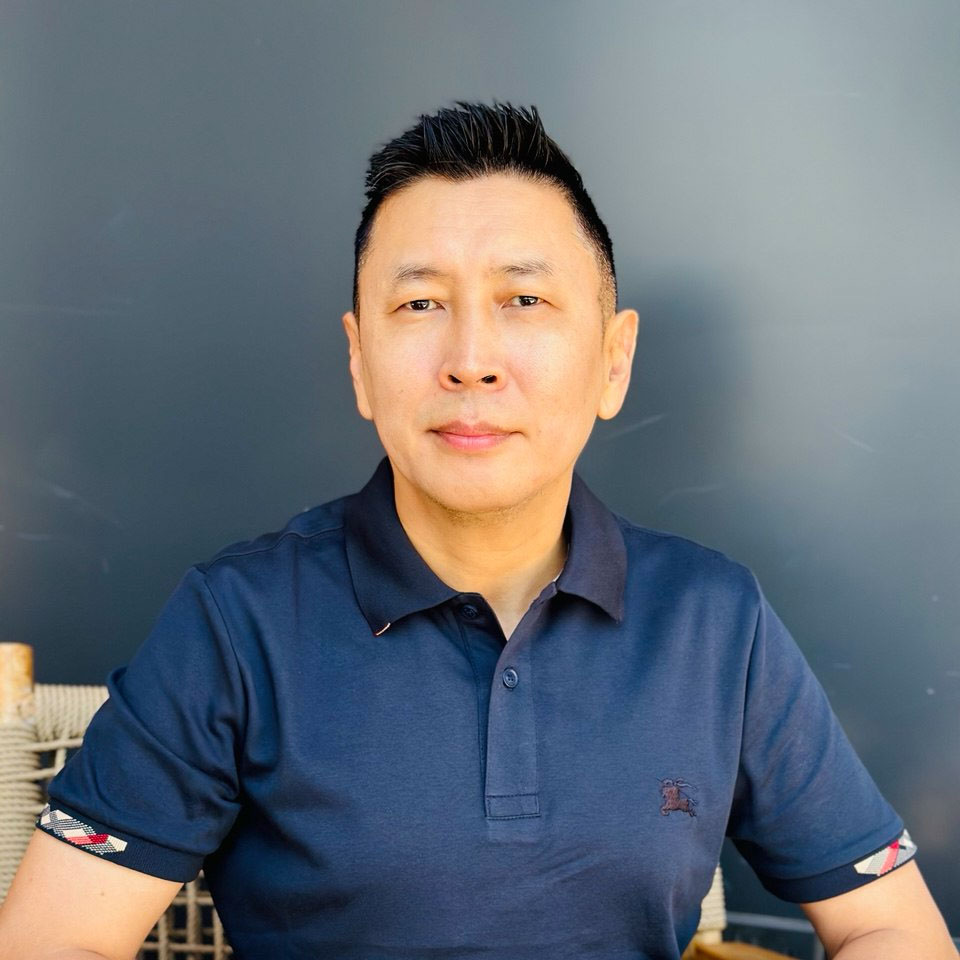
Tseren Tserenov
Founder, Aisystant
Eleven years ago I asked myself a question I still can't answer: what is the universe, and how was all of this made? You can't answer it alone. There's only one way — by growing not just your own intellect, but humanity's.
On the Kardashev scale, humanity has barely begun to harness the energy of its own planet. There's more work in the universe than there are people to do it — and that's not a metaphor, it's arithmetic.
So I'm not building a startup or a course. I'm building an environment where a person stays the author of their own thinking in the age of AI. AI is a multiplier: weak human intellect gets multiplied into weak output; strong intellect gets multiplied into strong output. We grow the first one.
Don't compare yourself to AI — compare the pairing. Not Tony Stark versus the suit, but Tony Stark inside the Iron Man suit. The honest question isn't "will AI replace me," it's "what am I adding to the suit?"
I'm working toward a simple standard: $10 and 10 hours a week, for life. The open methodology stays open forever — like Linux, like Wikipedia. We don't premiumize. We democratize.
This is a decades-long undertaking, and eleven years are already lived. If you recognize yourself in this — come in. The work is bigger than us.
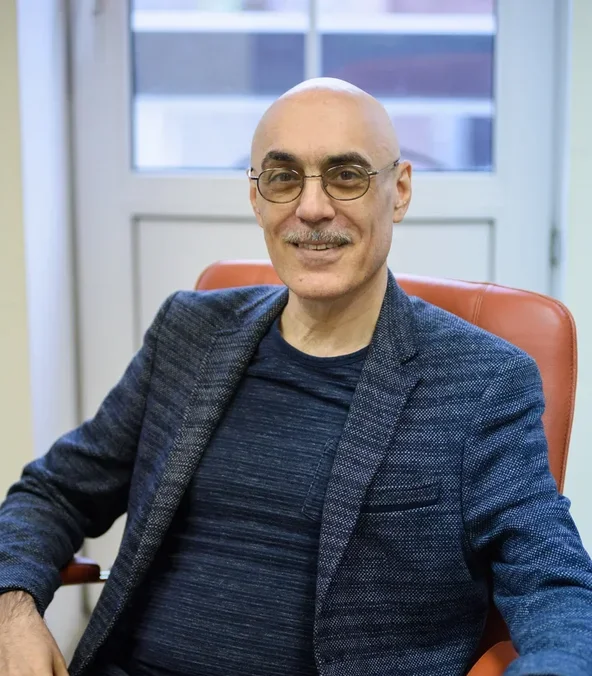
Anatoly Levenchuk
Author of First Principles, co-founder
Stronger AI does not remove the need for methodology. AI can generate fluent options quickly, but a project still needs to decide what counts as evidence, which options are actually being compared, whose answer can be relied on, when a claim goes stale, what remains only a guess, and what work is actually authorized. Methodology makes those boundaries explicit before a confident answer turns into an expensive mistake.
It is not a shrink-wrapped methodology, not checklist bureaucracy, not a cheat sheet for a quick answer, not a replacement for domain expertise, and not a demand to study the whole specification before any useful work begins.
Try it